Talk about these days music's genre aren't we?
So, I've been listening to this music style for awhile and I love it A LOT. Let's share what I love and you can give some thoughts about it okay? and maybe become fan of it so we can be fawning together <3

According to wikipedia, Electronic dance music (also known as EDM, dance music, club music, or simply dance) is a broad range of percussive electronic music genres produced primarily for dance-based entertainment environments such as nightclubs, raves, and festivals. The music is largely produced for playback by disc jockeys (DJs) and is generally used in the context of a live DJ mixes where the DJ creates a seamless selection of tracks by segueing from one recording to the next.
The "electronic dance music" and the acronym "EDM" was adopted by the U.S. music industry and music press as a buzzword
to describe the increasingly commercial American electronic music scene
that developed in the 2000s. In this context, EDM does not refer to a
specific genre, but is an umbrella term for a number of popular genres,
including house, dubstep, techno, trance, and trap.
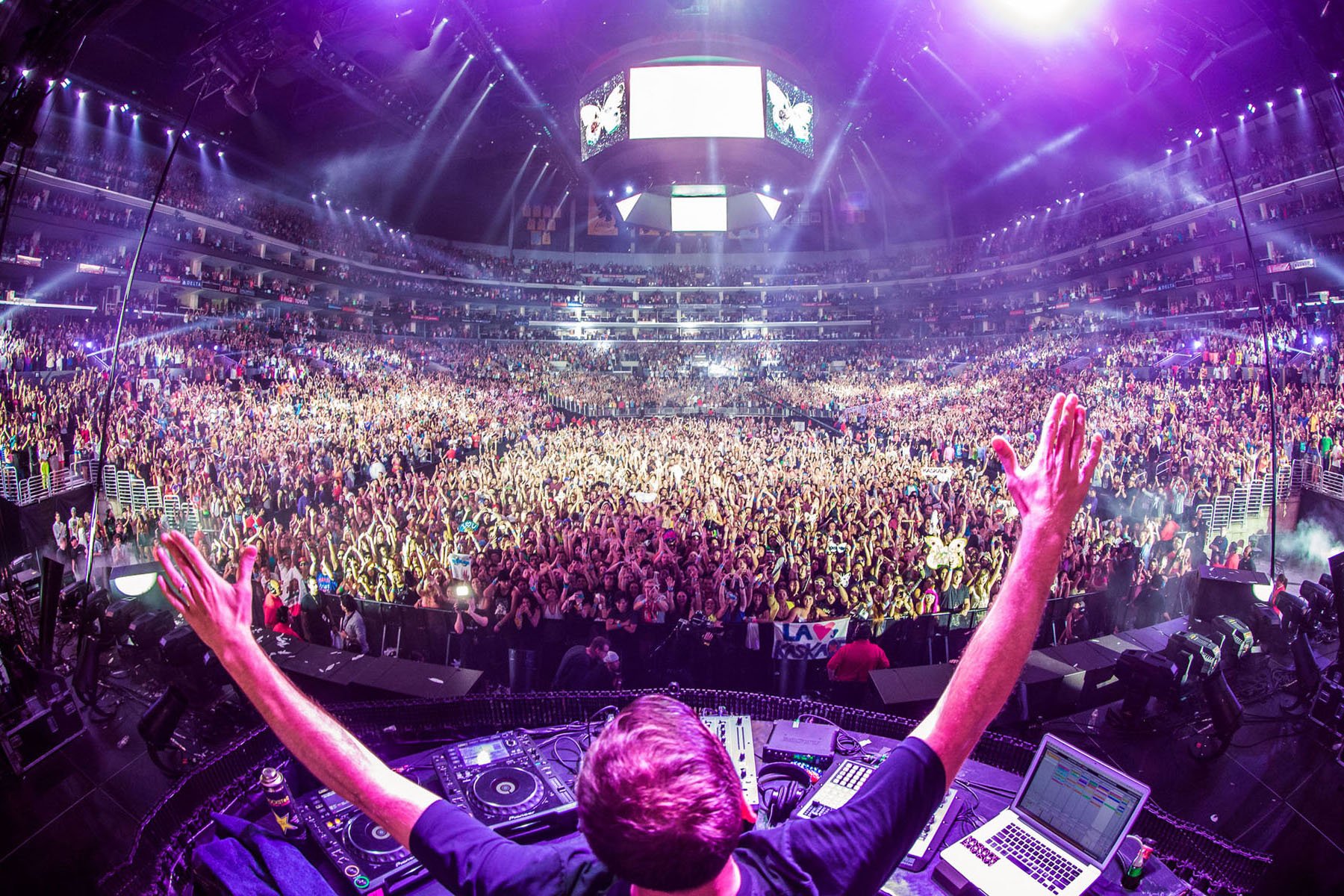
The term "electronic dance music" was used in the USA as early as 1985,
although the term "dance music" didn't catch on as a blanket term for
the genre(s) until the latter-1990s (when its acceptance by the U.S.
music industry was signified by the creation of "Dance" music-charts
[which continue to this day]; plus, the consistent use of the term
"dance music" in reference to artists, in music-review articles). In July 1995, Nervous Records and Project X magazine held their first award ceremony, titled, "Electronic Dance Music Awards."
Writing for The Guardian, journalist Simon Reynolds
noted that music industry adoption of the term "EDM" was part of an
intentional effort to re-brand (and to sharply differentiate past eras
of) "rave culture" in the U.S.—particularly, to "draw [a] line between
today's EDM, and '90s Rave".
While "EDM" has become the common blanket-term in the U.S., parts of
Europe, and online for dance music genres, in the UK the terms, "dance
music" or "dance", are more-commonly used.
What is widely perceived to be or defined as, "club music": changes
over time; includes different genres, depending on the region and who's
making the reference; and, may not always encompass electronic dance
music. Similarly, electronic dance music sometimes means
different things to different people. Both terms vaguely encompass
multiple genres, and sometimes are used as if they were a distinct,
unrelated, (respective) genre, unto itself. The distinction is, that
club music is ultimately based on what's popular; whereas, electronic
dance music is based on attributes of the music itself.
Just as rock, jazz and other musical genres have their own set of
subgenres, so does electronic dance music. Continuing to evolve over the
past 30 years dance music has splintered off into numerous subgenres
often defined by their varying tempo (BPM), rhythm, instrumentation used
and time period.

Typical tools for EDM production: computer, MIDI keyboard and mixer/sound recorder.
Notable U.S. electronic music festivals include the Ultra Music Festival in Miami, Electric Daisy Carnival in Las Vegas, NYC's Electric zoo, and TomorrowWorld—a spin-off of Belgium's TomorrowLand festival held outside of Atlanta. Rawley Bornstein, an MTV music and talent programmer, described electronic music as "the new rock and roll," as has Lollapalooza organizer Perry Ferrell. Ray Waddell, touring editor at Billboard magazine, noted that festival promoters have done an excellent job at branding
The increasing mainstream prominence of electronic music has also led major multi-genre festivals, such as Lollapolozaa and Coachella, to add more electronic and dance acts to their lineups, along with dedicated, EDM-oriented stages. Even with these accommodations, some major electronic acts, such as Deadmau5 and Calvin Harris respectively, have made appearances on main stages during the final nights of Lollapalooza and Coachella respectively—spots traditionally reserved for prominent non-electronic genres, such as rock and alternative.
A growing number of deaths caused by drug usage—an element carried over from it—have occurred at major festivals in recent years. Following the death of a 15-year-old attendee from an MDMA overdose at EDC Los Angeles in 2010, the Los Angeles Memorial Coliseum refused to host EDC or any other Insomniac-organized electronic music events, forcing the festival to move to its current home of Las Vegas the following year. Festival founder Pasquale Rotella argued that the death was an isolated incident that did not reflect the experience had by the majority of attendees. In 2013, Electric Zoo's final day was cancelled outright after two attendees died from hyperthermia caused by an overdose of MDMA. In response to these and similar incidents, festivals have employed a larger health and security presence to ensure the safety of attendees, implemented zero tolerance policies, and have partnered with anti-drug advocacy groups.
Drug deaths and other incidents have forced local governments to evaluate whether the risks of hosting EDM events outweigh the economic impact that they can bring to a municipality and its surrounding area: the 2014 Ultra Music Festival brought 165,000 attendees—and over $223 million—to the Miami/ South Florida region's economy.The inaugural TomorrowWorld brought $85.1 million to the Atlanta area — as much revenue as its hosting of the NCAA Final Four earlier in the year..
The increasing mainstream prominence of electronic music has also led major multi-genre festivals, such as Lollapolozaa and Coachella, to add more electronic and dance acts to their lineups, along with dedicated, EDM-oriented stages. Even with these accommodations, some major electronic acts, such as Deadmau5 and Calvin Harris respectively, have made appearances on main stages during the final nights of Lollapalooza and Coachella respectively—spots traditionally reserved for prominent non-electronic genres, such as rock and alternative.
A growing number of deaths caused by drug usage—an element carried over from it—have occurred at major festivals in recent years. Following the death of a 15-year-old attendee from an MDMA overdose at EDC Los Angeles in 2010, the Los Angeles Memorial Coliseum refused to host EDC or any other Insomniac-organized electronic music events, forcing the festival to move to its current home of Las Vegas the following year. Festival founder Pasquale Rotella argued that the death was an isolated incident that did not reflect the experience had by the majority of attendees. In 2013, Electric Zoo's final day was cancelled outright after two attendees died from hyperthermia caused by an overdose of MDMA. In response to these and similar incidents, festivals have employed a larger health and security presence to ensure the safety of attendees, implemented zero tolerance policies, and have partnered with anti-drug advocacy groups.
Drug deaths and other incidents have forced local governments to evaluate whether the risks of hosting EDM events outweigh the economic impact that they can bring to a municipality and its surrounding area: the 2014 Ultra Music Festival brought 165,000 attendees—and over $223 million—to the Miami/ South Florida region's economy.The inaugural TomorrowWorld brought $85.1 million to the Atlanta area — as much revenue as its hosting of the NCAA Final Four earlier in the year..


Tidak ada komentar:
Posting Komentar